Exhibition Opening: Cemetery of the Nameless
When:
Thursday, Oct 15, 2026 6:00p -
8:00p
Thursday, Oct 15, 2026 6:00p -
8:00p
Where:
Goethe-Institut
170 Beacon Street
Boston, MA 02116
Admission:
FREE
Hosted by:

Categories:
Art
Event website:
https://www.goethe.de/ins/us/en/sta/bos/ver.cfm?event_id=27337849
EXHIBITION HOURS (October 20-25)
Monday-Wednesday: 12-6 PM
Thursday-Friday: 12-8 PM
Saturday-Sunday: 12-4 PM
For the presentation at the Goethe-Institut Boston, artist Pınar Öğrenci adapts her "Cemetery of the Nameless" solo exhibition to the ornate nineteenth-century interior of the institute’s Back Bay Brownstone to create a site-specific installation that connects the landscape of the Turkish-Iranian border to Europe’s migration regime. Öğrenci excavates stories of disappearance—of both waters and people—as part of a return to her hometown and an ongoing artistic investigation she initiated in 2021.
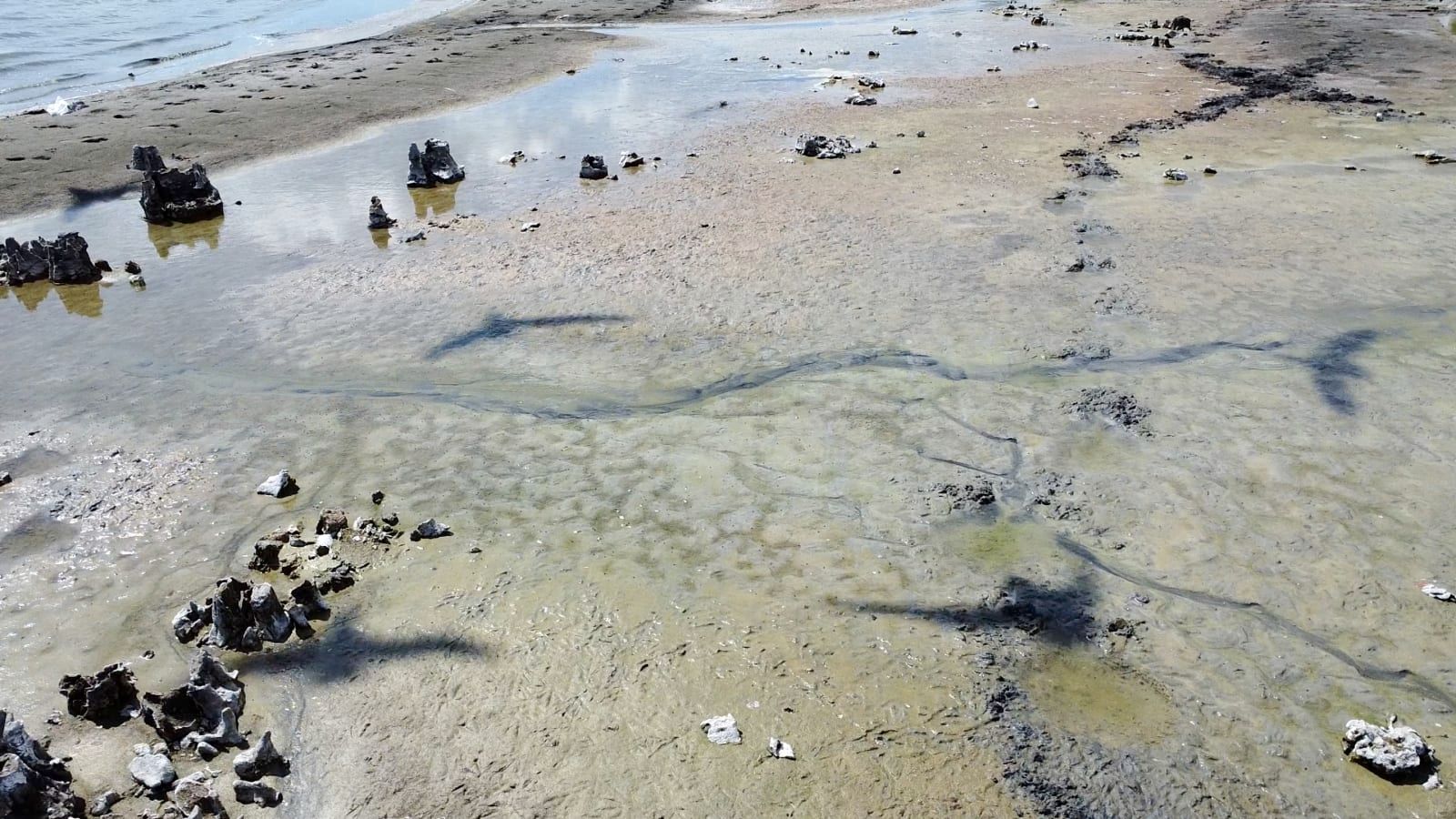
Climate change has dramatically lowered Lake Van’s water level, exposing extraordinary structures that lay hidden in the lake’s depths: microbialites, bizarre sedimentary formations resembling corals and stalagmites. These mineral deposits are the result of a millennia-lasting accumulation of calcium, carbonate, phosphate and magnesium—the very elements that human bones are made of—and take on a central role in Öğrenci’s haunting allegory.
The exhibition takes its name from cemeteries in the region where the many buried refugees and Kurds remainless outside of the forensic registry numbers on their tombstones. Öğrenci suggests an unsettling parallel between the loss of water and the loss of people’s lives: the lake serves as a mass grave, and these ghostly formations may well be monuments to the countless victims who perished in the region without burial—Armenians killed in the genocide of 1915-1916, Kurdish villagers shot at the Iranian borders, Afghan refugees who lost their way in the nearby mountains. She then takes her hypothesis to the another level: could the minerals released from the bodies lost in Van Lake over the centuries be contributing to the formation of the microbiolites? Through these interwoven narratives of displacement, persecution and flight, the exhibition questions the entanglement of environmental catastrophe and human suffering. Lake Van emerges not merely as a body of water, but as an archive of traumatic events—a repository where the stories of the living and the dead, both human and non-human, sediment together in layers of collective memory.
Öğrenci’s use of drone technology to capture these revelations adds another dimension of complexity. The same surveillance apparatus that now revolutionizes warfare through AI-enhanced precision is used to document this very landscape of violence at Turkey’s border with Iran. Since their invention in the 19th century, both photography and cinematography have been used for military purposes, but today’s satellite and drone imagery render the documentation of climate destruction and displacement with chilling efficiency. By making use of this technology to bear witness rather than to target, Öğrenci subverts its destructive potential, transforming these tools of surveillance into instruments of testimony and remembrance.
-

SponsoredNew Digs: A Market for the Recently Moved
Saturday, Sep 05, 2026 goes until 09/06
The Charles River Speedway